According to SPER Market Research, the Global Architectural Coatings, Enamels, Primers, Stains, Solvents, and Lacquers Market is estimated to reach USD 145.46 billion by 2034 with a CAGR of 4.86%.
Introduction and Overview
The report includes an in-depth analysis of the Global Architectural Coatings, Enamels, Primers, Stains, Solvents, and Lacquers Market, including market size and trends, product mix, Applications, and supplier analysis.
The global Architectural Coatings, Enamels, Primers, Stains, Solvents, and Lacquers market was valued at USD 90.5 billion in 2024, and it is expected to rise at an 4.86% CAGR from 2025 to 2034. The rising construction and renovation activities across residential, commercial, and infrastructure sectors. Rapid urbanization, population growth, and increasing investments in housing projects are boosting demand for decorative and protective coatings. Growing consumer preference for aesthetically appealing interiors and exteriors, along with higher awareness of surface protection and durability, further supports market growth.
By Product Type Insights
The architectural coatings segment is the dominant segment in the market due to its extensive application in residential, commercial, and public infrastructure buildings, where coatings are required both for visual appeal and long-term surface protection. Continuous construction and renovation activities, rapid urbanization, and rising housing and infrastructure development—particularly in emerging economies—ensure steady demand for these products. At the application level, water-based coatings dominate the market as a result of increasing environmental regulations on VOC emissions and growing consumer preference for safer, low-Odor, and eco-friendly solutions. Their ease of application, suitability for indoor use, and compliance with sustainability standards further reinforce their widespread adoption over solvent-based alternatives.
By Technology Insights
Water-based coatings dominated the market, driven by strict environmental regulations limiting solvent emissions and the growing shift toward sustainable construction practices. Their lower toxicity, fast-drying properties, and ease of application make them highly suitable for both residential and commercial applications. Increasing adoption of green building standards and certifications has further accelerated demand for waterborne systems. To enhance competitiveness, manufacturers are advancing hybrid polymer technologies to achieve performance levels comparable to solvent-based coatings, including improved durability and finish quality. Continuous technological advancements in adhesion, weather resistance, and gloss retention are also strengthening the growth of water-based coatings.
By End Use Insights
The residential segment is the dominant end-use segment in the architectural coatings, enamels, primers, stains, solvents, and lacquers market due to the continuous expansion of urban housing and sustained demand for new home construction and renovation activities. Rapid urbanization and improving housing affordability in emerging economies such as India, Vietnam, and Indonesia have significantly increased the consumption of interior and exterior coatings. In addition, shifting consumer preferences toward enhanced aesthetic versatility, durable finishes, and low-VOC, environmentally friendly products are driving innovation in residential coatings. The growing influence of e-commerce platforms, along with the adoption of digital paint visualizer tools, has improved product accessibility and customer engagement, further supporting volume growth in this segment.
Regional Insights
The Asia-Pacific region, with China at the forefront, holds the leading position in the market for architectural coatings, enamels, primers, stains, solvents, and lacquers. This leadership is largely fueled by rapid urbanization, accelerated development of tier-2 and tier-3 cities, and robust growth in residential construction across China and other emerging Asian economies. Growing demand for high-performance, long-lasting, and visually advanced coatings—along with increasing uptake of premium solutions featuring antibacterial and self-cleaning properties—continues to reinforce the region’s dominance.
In North America, particularly the United States, represents a mature yet steadily expanding market, supported by high consumption levels and a strong shift toward low-VOC and water-based coatings driven by stringent environmental regulations. Although the U.S. demonstrates consistent growth potential, Asia-Pacific remains the dominant region due to its larger construction activity, faster urban development, and significantly higher overall consumption.
Market Competitive Landscape
The competitive landscape of the architectural coatings, enamels, primers, stains, solvents, and lacquers market is shaped by innovation, sustainability initiatives, and global expansion strategies adopted by leading players including PPG Industries, The Sherwin-Williams Company, AkzoNobel N.V., RPM International Inc., Nippon Paint Holdings Co., Ltd., Axalta Coating Systems Ltd., BASF SE, Hempel A/S, Kansai Paint Co., Ltd., and Jotun A/S. These companies emphasize the development of eco-friendly, low-VOC, and water-based products to comply with strict environmental regulations and changing consumer preferences. Strategic mergers, acquisitions, and regional expansions help strengthen distribution networks and market presence. Continuous investment in research and development supports advancements in coating durability, colour stability, surface protection, and the adoption of digital tools and smart coating technologies.
Recent Developments:
• In January 2024, AkzoNobel introduced a new bio-based primer made from renewable raw materials, highlighting the company’s strong focus on sustainability while expanding its architectural coatings portfolio.
• In November 2023, AkzoNobel introduced the Interpon D1036 architectural powder coating, which cures at a lower temperature of 150°C, enabling significant energy and time savings compared to conventional powder coating systems.
• In June 2023, Nippon Paint Holdings entered into a business cooperation agreement focused on the development of smart primers featuring self-healing capabilities and enhanced durability.
• In February 2023, PPG Industries introduced PPG STEELGUARD 951, an advanced epoxy intumescent fire protection coating for architectural steel, offering up to three hours of fire resistance and strong corrosion protection in highly corrosive environments without requiring a topcoat.
Scope of the report:
Report Metric Details
Market size available for the years 2021-2034
Base year considered 2024
Forecast Period 2025-2034
Segments Covered By Product Type, By Technology, By End Use
Regions Covered North America, Latin America, Asia-Pacific, Europe, and Middle East & Africa
Companies Covered AkzoNobel N.V., Axalta Coating Systems Ltd., BASF SE, Hempel A/S, Jotun A/S, Kansai Paint Co., Ltd., Nippon Paint Holdings Co., Ltd., PPG Industries, Inc., RPM International Inc., The Sherwin-Williams Company.
Key Topics Covered in the Report
• Global Architectural Coatings, Enamels, Primers, Stains, Solvents, and Lacquers Market Size (FY’2021-FY’2034)
• Overview of Global Architectural Coatings, Enamels, Primers, Stains, Solvents, and Lacquers Market
• Segmentation of Global Architectural Coatings, Enamels, Primers, Stains, Solvents, and Lacquers Market by Product Type (Architectural coatings, Enamels, Primers, Stains, Solvents, Lacquers.)
• Segmentation of Global Architectural Coatings, Enamels, Primers, Stains, Solvents, and Lacquers Market by Technology (Water-based, Solvent-based.)
• Segmentation of Global Architectural Coatings, Enamels, Primers, Stains, Solvents, and Lacquers Market by End Use (Residential, Commercial, Industrial.)
• Statistical Snap of Global Architectural Coatings, Enamels, Primers, Stains, Solvents, and Lacquers Market
• Expansion Analysis of Global Architectural Coatings, Enamels, Primers, Stains, Solvents, and Lacquers Market
• Problems and Obstacles in Global Architectural Coatings, Enamels, Primers, Stains, Solvents, and Lacquers Market
• Competitive Landscape in the Global Architectural Coatings, Enamels, Primers, Stains, Solvents, and Lacquers Market
• Details on Current Investment in Global Architectural Coatings, Enamels, Primers, Stains, Solvents, and Lacquers Market
• Competitive Analysis of Global Architectural Coatings, Enamels, Primers, Stains, Solvents, and Lacquers Market
• Prominent Players in the Global Architectural Coatings, Enamels, Primers, Stains, Solvents, and Lacquers Market
• SWOT Analysis of Global Architectural Coatings, Enamels, Primers, Stains, Solvents, and Lacquers Market
• Global Architectural Coatings, Enamels, Primers, Stains, Solvents, and Lacquers Market Future Outlook and Projections (FY’2025-FY’2034)
• Recommendations from Analyst
Global Architectural Coatings, Enamels, Primers, Stains, Solvents, and Lacquers Market Size- By Product Type, By Technology, By End Use - Regional Outlook, Competitive Strategies and Segment Forecast to 2034
1. Introduction
1.1. Scope of the report
1.2. Market segment analysis
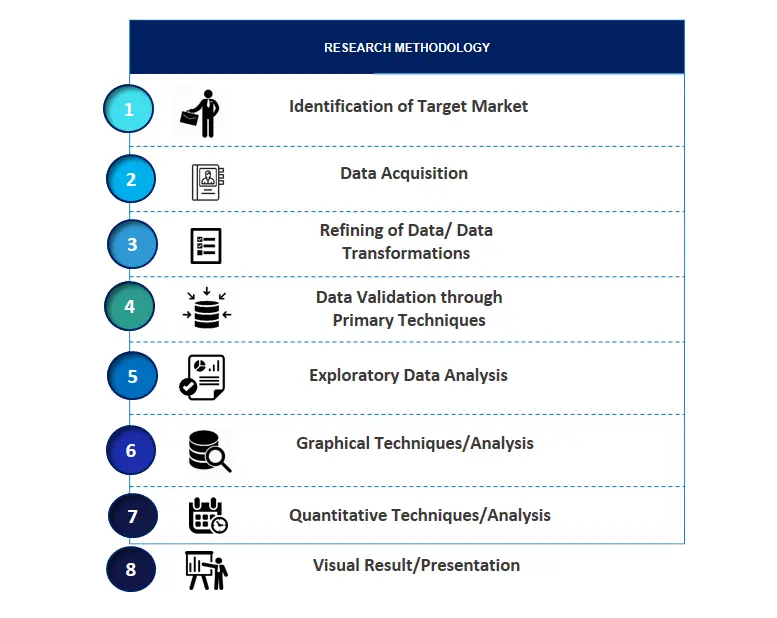
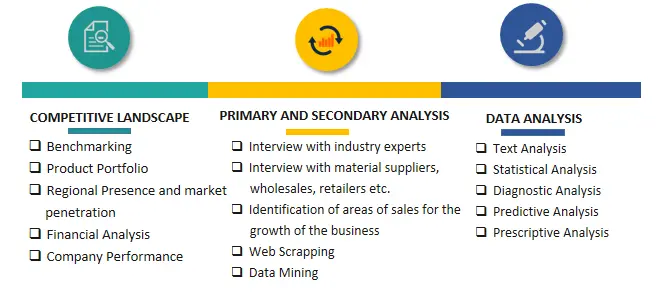
2. Research Methodology
2.1. Research data source
2.1.1. Secondary Data
2.1.2. Primary Data
2.1.3. SPER’s internal database
2.1.4. Premium insight from KOL’s
2.2. Market size estimation
2.2.1. Top-down and Bottom-up approach
2.3. Data triangulation
3. Executive Summary
4. Market Dynamics
4.1. Driver, Restraint, Opportunity and Challenges analysis
4.1.1. Drivers
4.1.2. Restraints
4.1.3. Opportunities
4.1.4. Challenges
5. Market variable and outlook
5.1. SWOT Analysis
5.1.1. Strengths
5.1.2. Weaknesses
5.1.3. Opportunities
5.1.4. Threats
5.2. PESTEL Analysis
5.2.1. Political Landscape
5.2.2. Economic Landscape
5.2.3. Social Landscape
5.2.4. Technological Landscape
5.2.5. Environmental Landscape
5.2.6. Legal Landscape
5.3. PORTER’s Five Forces
5.3.1. Bargaining power of suppliers
5.3.2. Bargaining power of buyers
5.3.3. Threat of Substitute
5.3.4. Threat of new entrant
5.3.5. Competitive rivalry
5.4. Heat Map Analysis
6. Competitive Landscape
6.1. Global Architectural Coatings, Enamels, Primers, Stains, Solvents, and Lacquers Market Manufacturing Base Distribution, Sales Area, Product Type
6.2. Mergers & Acquisitions, Partnerships, Product Launch, and Collaboration in Global Architectural Coatings, Enamels, Primers, Stains, Solvents, and Lacquers Market
7. Global Architectural Coatings, Enamels, Primers, Stains, Solvents, and Lacquers Market, By Product Type (USD Million) 2021-2034
7.1. Architectural coatings
7.2. Enamels
7.3. Primers
7.4. Stains
7.5. Solvents
7.6. Lacquers
8. Global Architectural Coatings, Enamels, Primers, Stains, Solvents, and Lacquers Market, By Technology (USD Million) 2021-2034
8.1. Water-based
8.2. Solvent-based
9. Global Architectural Coatings, Enamels, Primers, Stains, Solvents, and Lacquers Market, By End Use (USD Million) 2021-2034
9.1. Residential
9.2. Commercial
9.3. Industrial
10. Global Architectural Coatings, Enamels, Primers, Stains, Solvents, and Lacquers Market, (USD Million) 2021-2034
10.1. Global Architectural Coatings, Enamels, Primers, Stains, Solvents, and Lacquers Market Size and Market Share
11. Global Architectural Coatings, Enamels, Primers, Stains, Solvents, and Lacquers Market, By Region, (USD Million) 2021-2034
11.1. Asia-Pacific
11.1.1. Australia
11.1.2. China
11.1.3. India
11.1.4. Japan
11.1.5. South Korea
11.1.6. Rest of Asia-Pacific
11.2. Europe
11.2.1. France
11.2.2. Germany
11.2.3. Italy
11.2.4. Spain
11.2.5. United Kingdom
11.2.6. Rest of Europe
11.3. Middle East and Africa
11.3.1. Kingdom of Saudi Arabia
11.3.2. United Arab Emirates
11.3.3. Qatar
11.3.4. South Africa
11.3.5. Egypt
11.3.6. Morocco
11.3.7. Nigeria
11.3.8. Rest of Middle-East and Africa
11.4. North America
11.4.1. Canada
11.4.2. Mexico
11.4.3. United States
11.5. Latin America
11.5.1. Argentina
11.5.2. Brazil
11.5.3. Rest of Latin America
12. Company Profile
12.1. AkzoNobel N.V.
12.1.1. Company details
12.1.2. Financial outlook
12.1.3. Product summary
12.1.4. Recent developments
12.2. Axalta Coating Systems Ltd.
12.2.1. Company details
12.2.2. Financial outlook
12.2.3. Product summary
12.2.4. Recent developments
12.3. BASF SE
12.3.1. Company details
12.3.2. Financial outlook
12.3.3. Product summary
12.3.4. Recent developments
12.4. Hempel A/S
12.4.1. Company details
12.4.2. Financial outlook
12.4.3. Product summary
12.4.4. Recent developments
12.5. Jotun A/S
12.5.1. Company details
12.5.2. Financial outlook
12.5.3. Product summary
12.5.4. Recent developments
12.6. Kansai Paint Co., Ltd.
12.6.1. Company details
12.6.2. Financial outlook
12.6.3. Product summary
12.6.4. Recent developments
12.7. Nippon Paint Holdings Co., Ltd.
12.7.1. Company details
12.7.2. Financial outlook
12.7.3. Product summary
12.7.4. Recent developments
12.8. PPG Industries, Inc.
12.8.1. Company details
12.8.2. Financial outlook
12.8.3. Product summary
12.8.4. Recent developments
12.9. RPM International Inc.
12.9.1. Company details
12.9.2. Financial outlook
12.9.3. Product summary
12.9.4. Recent developments
12.10. The Sherwin-Williams Company
12.10.1. Company details
12.10.2. Financial outlook
12.10.3. Product summary
12.10.4. Recent developments
12.11. Others
13. Conclusion
14. List of Abbreviations
15. Reference Links